EN
EN


 Service Hotline


Industrial operations are evolving fast not because of trends, but because connected devices now sit at the center of every workflow, from production tracking to workforce mobility. Yet most factories and automotive environments still run on fragmented systems that weren’t built for this level of mobility or scale.
This is where Mobile Device Management (MDM) becomes essential. With a platform like AppTec360 Enterprise Mobility Management, industrial teams can secure, manage, and standardize thousands of endpoints across plants, warehouses, and field operations without disrupting existing IT and OT setups.
MDM isn’t an add-on anymore; it’s the missing layer that allows industrial IT infrastructure to modernize confidently, securely, and at scale.
TL;DR
Who this blog is for:
This blog is for industrial IT leaders, manufacturing CIOs/CTOs, OT managers, and enterprise mobility teams in industries such as automotive, manufacturing, logistics, and large-scale industrial operations who are looking to modernize device management without disrupting existing IT/OT environments.
What’s covered in this blog:
- Why traditional industrial IT infrastructure struggles with mobility, security, and scale
- The evolving requirements of modern industrial and automotive environments
- How Mobile Device Management (MDM) enables centralized control and visibility
- The role of AppTec360 Enterprise Mobility Management in securing and managing industrial endpoints
- Key MDM features supporting rugged devices, kiosks, and remote operations
- Operational and security benefits for manufacturing and industrial enterprises
- Deployment and scalability considerations across multi-site environments
- Why MDM acts as a backbone for industrial digital transformation
Get a free trial of our MDM solution for up to 25 devices and see how easy managing your mobile ecosystem can be.
Why Traditional Industrial IT Falls Short
Industrial environments including automotive production sites, assembly plants, and logistics hubs often rely on a mix of legacy machines, standalone terminals, and unmanaged mobile devices that are not integrated into a central IT framework. This fragmentation creates multiple challenges:
- Inconsistent device visibility and control: IT teams struggle to monitor which devices are connected, what software they run, or whether they are compliant with corporate policies.
- Security vulnerabilities: Outdated operating systems, unpatched endpoints, and unmanaged mobile devices provide entry points for attackers and increase risk across the network.
- Manual and reactive management: Without centralized oversight, updates and troubleshooting require manual intervention costly and slow in large facilities.
- Limited remote capabilities: As businesses expand geographically and support remote operations, legacy systems lack the ability to push updates or diagnostics across distributed sites efficiently.
These gaps can severely constrain agility and increase exposure to threats, particularly as industries embrace more mobile workflows and digitally enabled operations.
What Modern Industrial IT Really Needs
To thrive in an era defined by connectivity and real-time data, modern industrial IT must evolve:
- Unified device management: IT must manage not only traditional desktops and laptops but also ruggedized devices, wearables, and tablets from a single platform.
- Real-time interoperability: Distributed plants and shop floors increasingly depend on synchronous data flows as a requirement that only modern endpoint frameworks can deliver.
- Secure data exchange: Whether it’s production telemetry or maintenance workflows, industrial systems need secure communications across devices, cloud platforms, and core business systems.
- Regulatory compliance and cybersecurity: Industrial operations must meet stringent security standards and adapt to evolving frameworks from ISO/IEC standards to industry-specific compliance mandates.
Achieving these capabilities requires more than piecemeal device tools; it demands comprehensive, scalable management solutions that can serve as the backbone of modern IT infrastructure.
Also Read
How MDM Modernizes Industrial IT Infrastructure
MDM technologies like AppTec360 empower enterprises to unify and control their device ecosystems at scale through several core capabilities:
Centralized Device Management
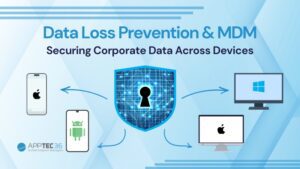
Through a single console, IT administrators can manage thousands of devices from mobile workstations to rugged handhelds across facilities and field operations. This centralized control reduces fragmentation and enhances visibility.
Security Enforcement & Zero Trust
MDM helps enforce advanced security policies including authentication, encryption, and conditional access ensuring endpoints comply with corporate and industry security requirements. With tools like ContentBox (AppTec’s secure file sync and share feature), sensitive data remains protected at all times.
Automation & Remote Capabilities
With remote diagnostics, policy enforcement, and OS updates, IT can proactively manage issues without dispatching technicians on site. This automation reduces downtime and accelerates response times.
Standardization Across Sites
MDM enables consistent configurations and policy enforcement across multiple locations, making it easier to onboard new devices quickly and maintain operational continuity.
Key MDM Features Supporting Industrial Needs
To support these modernization goals, effective MDM solutions include features such as:
- Kiosk Mode: Lock devices into dedicated industrial workflows or applications.
- Rugged Device Support: Manage specialized scanners, tablets, and industrial equipment.
- Real-Time Monitoring: Track device health, compliance, and performance.
- Secure Access Controls: Implement VPNs, certificates, and conditional access policies.
- Application and Patch Management: Deployment and updates for business-critical apps.
- Network & Web Restrictions: Reduce threat surfaces by controlling access.
These features allow IT teams to balance operational flexibility with security and governance, especially crucial for organizations adopting hybrid IT architectures.
Also Read
Benefits for Manufacturing and Industrial Enterprises
Industrial companies that adopt modern MDM solutions like AppTec360’s Enterprise Mobility Management can realize a wide range of benefits:
- Increased uptime and continuity: Proactive management reduces device failures and operational disruptions.
- Enhanced security posture: Centralized controls help prevent breaches and enforce compliance across devices.
- Streamlined IT operations: Automated workflows free IT teams to focus on strategic initiatives rather than routine maintenance.
- Support for mobile and connected workflows: Empowering mobile workforces with secure, managed devices enables digital work instructions, field service support, and real-time analytics.
While the automotive industry is one segment benefiting from these capabilities especially where connected manufacturing and digital supply chains are key the value of MDM extends across all industrial domains where device proliferation and mobility are transforming operations.
Deployment & Scalability Considerations
Implementing MDM doesn’t happen overnight but with thoughtful planning, it can quickly deliver value:
- Integration with existing infrastructure: MDM platforms like AppTec360 can align with both operational technology (OT) and traditional IT systems without disruptive overhauls.
- Scalable onboarding: Through automated enrollment and role-based policies, large fleets of devices can be managed efficiently whether on-premises, cloud, or hybrid.
- Multi-site support: Consistent governance across locations ensures teams worldwide operate under unified standards.
- Compatibility with device vendors: MDM must work seamlessly with rugged and specialized industrial hardware to avoid gaps in coverage.
Wrap Up: MDM as the Backbone of Industrial Digital Transformation
Modern industrial IT infrastructure requires more than just connectivity; it needs secure, scalable, and centralized device management to support mobility, compliance, and growth. Mobile Device Management, exemplified by AppTec360’s Enterprise Mobility Management platform, provides that foundation.
By enabling comprehensive endpoint control, advanced security enforcement, and real-time oversight, MDM empowers businesses to automotive and otherwise to modernize their operations without compromising safety or performance.
If your organization is navigating the complexities of digital transformation, evaluating your device management maturity and considering a demo of AppTec360 can be a strong step toward secure and efficient industrial IT modernization.
Looking to gain better control over your industrial device ecosystem? Connect with our team to assess your current device management approach and explore how AppTec360’s Mobile Device Management platform can help you secure, standardize, and scale devices across your industrial operations.
FAQ’s
1. How does MDM help industrial and automotive IT teams?
MDM enables centralized management, security enforcement, and remote support for industrial and automotive devices, helping teams maintain uptime and consistency across sites.
2. Is AppTec360 MDM suitable for multi-site industrial deployments?
Yes. AppTec360 MDM supports centralized control, role-based access, and scalable device onboarding across multiple plants and facilities.